
Tinnitus Habituation Therapy vs Lenire Treatment in Los Gatos

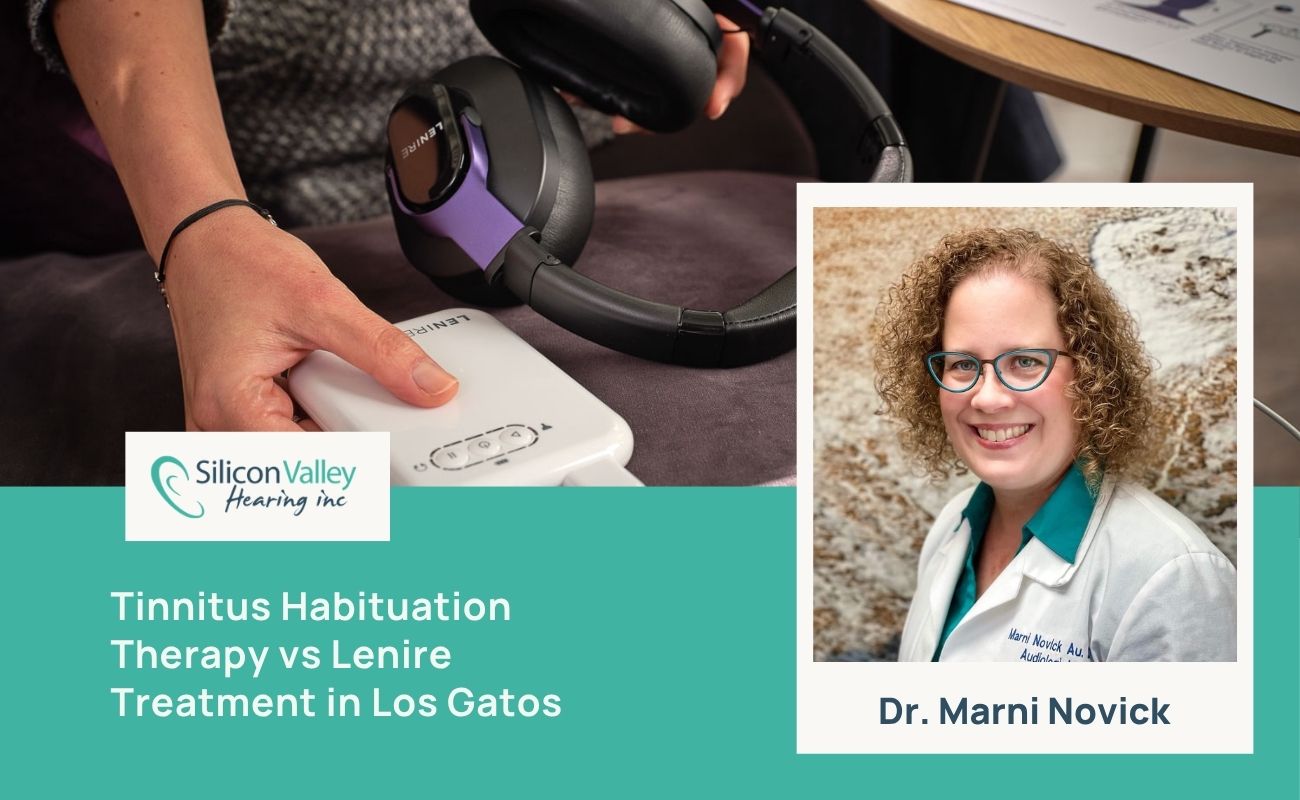

If you've been living with tinnitus, you've probably been told to "just learn to live with it." That advice is frustrating — but there's actually something to it, just not in the dismissive way it's usually delivered. Habituation therapy is a real, structured treatment. And now there's something new alongside it: Lenire, an FDA-cleared device that works differently than anything before it. Here's how both options actually work, and how we help patients in the Los Gatos area figure out the right path forward for their unique situation.
{{quiz="/quiz-component"}}
How Habituation Therapy Works
The most well-known version is Tinnitus Retraining Therapy, or TRT. The goal isn't to make the ringing disappear — it's to train your brain to stop treating it as a threat. Think of it like a smoke alarm going off constantly. Right now, your brain is treating every beep as urgent. TRT teaches it to file that signal as background noise instead.
There are two parts to TRT. The first is one-on-one counseling, where we help you understand what's actually happening neurologically when you perceive tinnitus. The second is sound therapy — small in-ear devices that emit low-level broadband sound, reducing the contrast between your tinnitus and your surrounding environment. Over time, your brain naturally begins to tune the signal out.
TRT also helps patients dealing with sound sensitivity, not just tinnitus on its own. The timeline is different for everyone. Some people notice real improvement within a few months; others take longer. It requires follow-up visits and genuine commitment — but for many patients, it delivers lasting results.
What Makes Lenire Different
Lenire takes a completely different approach. It's the first FDA-cleared device to use bimodal neuromodulation — a process that stimulates two sensory pathways at the same time to encourage your brain to reorganize how it processes tinnitus.
Here's what that looks like in practice: you wear Bluetooth headphones delivering customized sound while a small device called a Tonguetip rests comfortably in your mouth, sending gentle electrical pulses to your tongue. Those pulses activate the trigeminal nerve — the same nerve involved in touch and facial sensation. Your brain receives simultaneous input through both your auditory and trigeminal pathways.
That dual stimulation is what sets Lenire apart from traditional sound therapy. It's not masking the tinnitus or helping you ignore it — it's working to retrain the underlying neural patterns that generate it in the first place. Clinical trials found that 83% of patients recommended Lenire, and those outcomes hold up in real-world use as well.
Silicon Valley Hearing is the only Lenire provider in Santa Clara County. Dr. Marni Novick, who has personal experience with both hearing loss and tinnitus, oversees every fitting and follow-up in our office.
How to Know Which Treatment Fits You
These two approaches aren't really competing with each other — they're different tools for different situations. Choosing between them depends on your specific type of tinnitus, your lifestyle, and what kind of treatment process works for you.
TRT is often a strong fit if your tinnitus is tied to sound sensitivity, or if you're looking for a treatment grounded in behavioral and neurological retraining through regular engagement with a clinician. Lenire tends to appeal to patients who want a home-based option with strong clinical backing. Treatment sessions are done at home using the device, with follow-up visits in our office to adjust settings and track your progress.
Some patients use both — pairing Lenire's device with counseling support along the way. We build every treatment plan around the individual. There's no one-size-fits-all answer here.
What Your First Appointment Involves
Before we recommend anything, we do a thorough tinnitus evaluation. This isn't a quick screener — it's a two-hour initial consultation that includes a full hearing assessment, detailed tinnitus characterization, and an honest conversation about what you're going through day to day.
That depth matters because roughly 90% of tinnitus cases involve some degree of underlying hearing loss. We need the full picture to give you the right recommendation. Dr. Novick holds certificates in Tinnitus Management, which means this is a core part of what we do — not a side service.
After your evaluation, we'll walk through your options clearly and explain what we believe gives you the best chance of real, lasting improvement.
Ready to Take the Next Step?
If you're looking for answers — not just someone to tell you to cope — we'd love to help. Silicon Valley Hearing serves patients throughout Los Gatos, San Jose, Saratoga, Campbell, Cupertino, and the surrounding areas.
Call us at (408) 540-7128 to schedule your tinnitus consultation.


